
Development Application (DA) versus Complying Development Certificate (CDC)
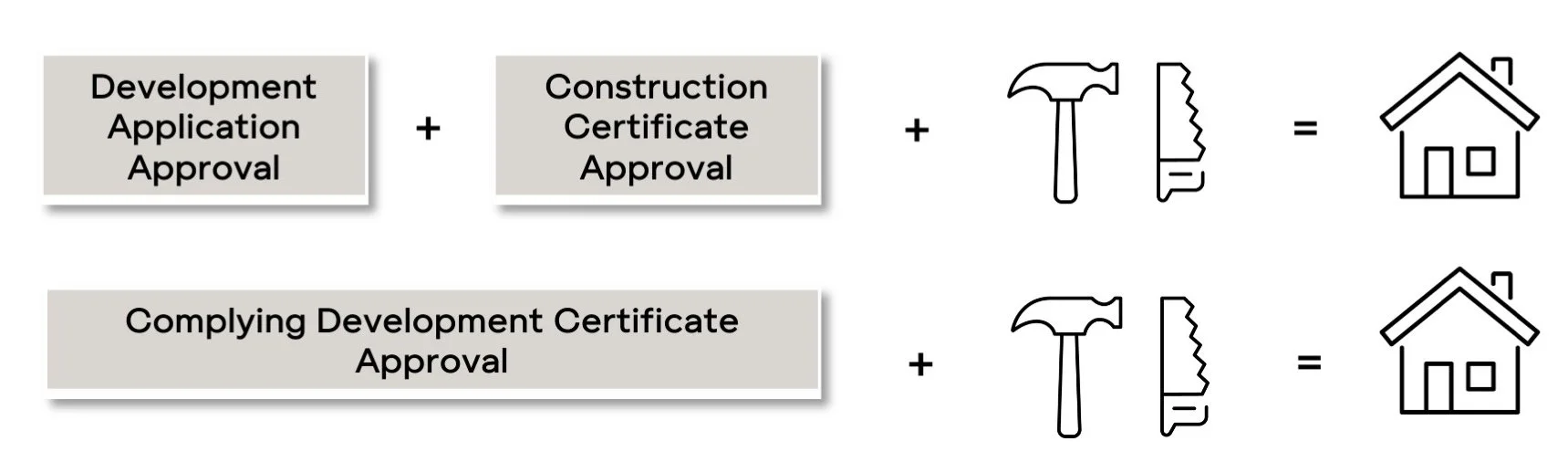
What’s the Difference Between a Development Application (DA) and a Complying Development Certificate (CDC) for your home?
When planning a building project, one of the first questions is which approval pathway applies: a Development Application (DA) or a Complying Development Certificate (CDC). While both lead to council or certifier approval, they suit different types of projects and come with different levels of flexibility, timeframes, and requirements.
Development Application (DA)
A Development Application is typically required for more complex or bespoke projects, including three storey or more homes, that need a detailed, merit-based assessment by the local council. This process allows greater design flexibility, as proposals are assessed on their individual planning merits rather than strict preset rules.
DAs must be designed in accordance with the local council’s:
• Local Environmental Plan (LEP), and
• Development Control Plan (DCP)
Because the proposal is reviewed by council planners (and sometimes neighbours or referral authorities), the DA process generally takes longer than a CDC. It’s also important to note that DA approval provides planning consent only—a separate Construction Certificate (CC) is required before building work can begin.
Complying Development Certificate (CDC)
A Complying Development Certificate is a fast-tracked approval pathway available for certain types of development on eligible land. To qualify, the design must strictly meet a set of pre-defined development standards, with little to no variation allowed. As the CDC process also provides construction approval, full construction documentation and specifications are required, and a builder must be appointed at the time of application.
CDC approvals are governed by state legislation under the State Environmental Planning Policy (Exempt and Complying Development Codes) 2008, commonly known as the Codes SEPP. Because the assessment is objective and rules-based, approvals can be issued quickly—often in as little as 20 days.
Which Option Is Right for Your Project?
In simple terms:
• A DA is required if your project is complex, site-specific, or requires design flexibility.
• A CDC is possible if your project fits neatly within the prescribed standards and speed is a priority.
At Mont Architects we can help you determine the most suitable pathway early in the design process, potentially saving time, cost, and unnecessary redesign. We welcome you to Contact us to discuss which process may be right for your project.